Posts

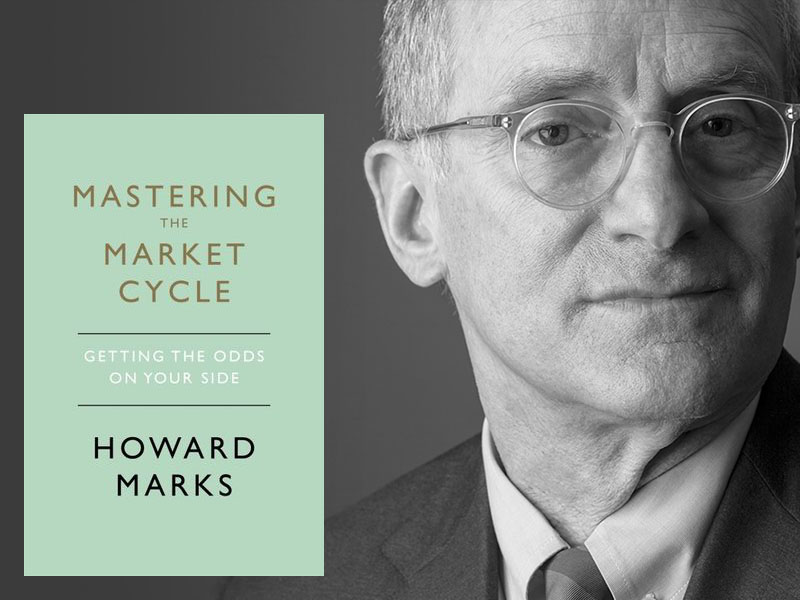
Book Review: "Mastering the Market Cycle" by Howard Marks – A Must-Read for Every Investor
Image
If you’ve ever wondered why markets soar and crash, why investors often make irrational decisions, or how you can consistently improve your investment outcomes, Howard Marks’ "Mastering the Market Cycle" is the guide you need. This book isn’t just for financial professionals; it’s a roadmap for anyone looking to navigate the complexities of markets with confidence and clarity. Marks, a legendary investor and co-founder of Oaktree Capital Management, distills decades of experience into actionable wisdom about the natural ebbs and flows of economies, markets, and human behavior. Why This Book Stands Out Howard Marks achieves what few finance authors manage to do: he makes an intricate topic clear, practical, and deeply insightful . Unlike books that promise quick riches or try to predict the future, "Mastering the Market Cycle" focuses on understanding the patterns and principles that drive markets, helping readers become smarter, more strategic, and less emotional...

Unleash Your Inner Genius: Lessons from Creative Confidence By Tom Kelley and David Kelley

Image
Imagine a world where fear of failure doesn’t hold you back, where every challenge sparks a bold idea, and where creativity becomes your superpower for achieving remarkable success. That’s the world Tom Kelley and David Kelley invite you to create in their transformative book, Creative Confidence . This isn’t just a book about creativity; it’s a guide to unlocking your potential and using creativity as a strategic tool to amplify your personal and professional life. Whether you’re a student, an entrepreneur, a teacher, or a leader, the lessons from Creative Confidence are universal and game-changing. Let’s dive into the most impactful insights from the book and explore how they can revolutionize the way you think, work, and live. Lesson 1: Redefining Failure as Your Greatest Ally What’s the biggest obstacle to creativity? According to the Kelleys, it’s fear of failure . How often have you stopped yourself from trying something new because you were afraid of getting it wrong? Creative ...

Book Review: From Third World to First by Lee Kuan Yew – Strategic Lessons for Vietnam’s Leap to Prosperity

Image
  How does a nation with no natural resources, a volatile geopolitical position, and limited land become one of the richest countries in the world? In From Third World to First , Lee Kuan Yew reveals the transformative strategies that turned Singapore into a global success story. For Vietnam—an emerging economy with immense potential—this book offers not just inspiration, but actionable strategies. However, not all lessons can be applied as-is. Let’s explore the most strategic points and how they can guide Vietnam’s journey to becoming a developed country. 1. Anti-Corruption as the Bedrock of National Development Singapore’s Approach : Lee Kuan Yew viewed corruption as a cancer that stifles growth, erodes trust, and diverts resources. Singapore attacked it head-on by creating the Corrupt Practices Investigation Bureau (CPIB) and implementing strict laws. Civil servants were paid competitive salaries to minimize temptation, and high-profile cases were prosecuted to set examples. Vie...

My Take on Why Nations Fail: A Personal Review and Critique of What Really Drives National Success

Image
Daron Acemoglu and James A. Robinson’s book,  Why Nations Fail , offers a bold argument about the roots of prosperity and poverty. The authors place institutions —political and economic systems—at the heart of their thesis, arguing that nations with inclusive institutions thrive, while those with extractive institutions stagnate. Inclusive institutions empower people, promote innovation, and ensure fairness. Extractive institutions, by contrast, concentrate wealth and power in the hands of a few, suppressing creativity and opportunity. This framework is compelling, but it simplifies a far more complex reality. In my view, institutions are essential—perhaps one of the most important components in the puzzle of national success—but they are not the only factor. Like Principal Component Analysis (PCA -  a method that takes a large set of data and reduces it to a few key components that explain the most variation ) in machine learning, institutions are just one principal compo...

Vietnam: Rising Dragon: Tackling Corruption, Empowering Change, and Building a Prosperous Future

Image
In the book  Vietnam: Rising Dragon , author Bill Hayton presents an in-depth look at Vietnam’s extraordinary evolution from a closed, centrally planned economy to one of Southeast Asia’s most dynamic markets. Since the implementation of the  Đổi Mới  (Renovation) reforms in the 1980s, Vietnam has experienced rapid economic growth and modernization. This shift has opened the door to new opportunities, yet it has also introduced structural challenges, from rising inequality to issues of governance, including systemic corruption. Stability has remained a cornerstone of Vietnam’s progress, and the government has carefully managed change to maintain this stability, recognizing the importance of a controlled, gradual approach to reform.  This article reflects my thoughts after reading Vietnam: Rising Dragon by Bill Hayton. It explores the roots of Vietnam’s successes, the current challenges it faces—particularly with corruption—and how strategic, well-paced reforms could...

Dao

Image
Since childhood, I have had a heart for the Dao. At the age of 14, I read about Confucius, admired him, and wanted to follow the examples of the wise ones who came before. At 15, I read Zhuangzi; though I didn’t yet understand the concept of "non-action" (Wu Wei), I was captivated by the free and expansive style in The Equality of Things and The Happiness of Roaming Freely . I then delved deeper into Confucianism and Daoism, reading Confucianism by Trần Trọng Kim, Dao De Jing by Laozi, and other works. But I still didn’t truly understand the Dao; I was only exploring knowledge. At 22, a life-changing event led me to study and explore Buddhism. Eastern Dao holds a latent power that those who haven’t experienced it cannot truly understand. The Dao is a path, but which path is meant for you? Which path is meant for each of us? Why has the Eastern Dao fallen behind, overshadowed by the scientific and technological might of the West? And why do people nowadays tend to speak of ...

A letter of justice - Nguyen Quang Bich

Image
     A LETTER OF JUSTICE The person who wrote this letter was Nguyen Quang Bich, who passed successfully the imperial exam to become Doctor of Confucianism in 1869, and was a mandarin in Nguyen dynasty. Fighting many battles with French colonialist force, maintaining the Can Vuong movement in Hung Hoa, Phu Tho for 4 years after the fall of the capital. He passed away at the end of the year of Ky Suu in 1890 when he was 60 years old, leaving Ngu Phong Thi Tap poetry collection made during the time of Can Vuong. The following quoted letter answers to the French call for surrender. "... When you came here, one you said that it was for peace, two you said that it was for protection, then you occupied our strongholds, dismissed our king, expelled our generals, and then established Dong Khanh as new king himself. It was merely a trick of the person who covers his ears while stealing the bells. Political interests are in the hands of you. Our civil and military mandarins are a...